
Salt Lake City commercial roofing
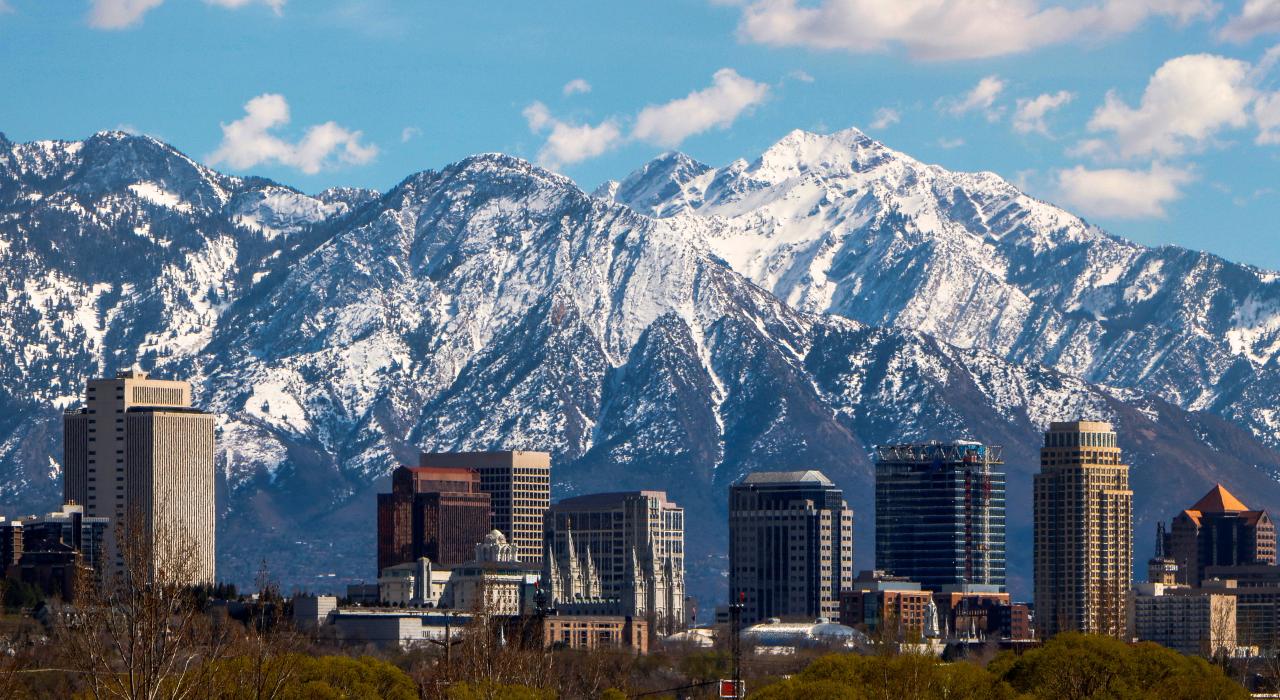
Salt Lake City puts a genuinely unusual pair of stresses on a commercial roof: heavy Wasatch snow load in winter and intense high-altitude ultraviolet the rest of the year. The low-slope membranes covering the massive distribution centers of the northwest quadrant and the Salt Lake City International and Inland Port logistics belt, the office and life-science buildings along the I-15 corridor and the growing Silicon Slopes footprint toward Draper and Lehi, the downtown financial core, and the industrial stock in the west valley all sit at roughly 4,300 feet, where the sun ages membranes faster than at sea level and where winter storms rolling off the Great Salt Lake can drop deep, wet snow that loads a roof structure for weeks. That mix — punishing UV, real structural snow load, and a hard freeze-thaw cycle in between — defines the risk owners here carry. We advise building owners, REITs, and asset managers on documented condition, capital planning, and contractor oversight built for it.
Snow load, freeze-thaw, and altitude UV
The winter concern in the Salt Lake Valley is not only whether a roof leaks but whether it is carrying more weight than its owner realizes. Deep, wet snow and the ice that forms during repeated melt-and-refreeze cycles add real load, and drifting against parapets and mechanical screens concentrates that weight where the structure is often least prepared for it. Meltwater that refreezes overnight backs up at drains, scuppers, and cold edges, and every thaw drives water into any seam or flashing gap that the freeze had already worked open. Then summer flips the stress entirely: thin, dry high-desert air lets ultraviolet chalk and embrittle membranes and dry out sealants, so the same roof is punished from opposite directions across the year.
For owners, the practical consequence is that drainage performance and detail integrity have to be verified before winter, not discovered during it. A drain that clears fine in October but ices over in January is a leak waiting for the January thaw, and on a large flat roof that water has nowhere to go but into the assembly and the tenant space below.
The buildings and owners we work with
Salt Lake's commercial inventory is increasingly dominated by very large logistics and manufacturing footprints tied to the region's role as an intermountain distribution hub, alongside a fast-growing technology and life-science base and a stable downtown office and institutional core. A newer distribution roof of several hundred thousand square feet is mostly about protecting an existing investment through disciplined maintenance and snow-season readiness; older retail, office, and industrial roofs are about sequencing replacements deliberately. We track these as distinct risk profiles for owners holding several buildings across the Wasatch Front as part of our Utah commercial roof advisory coverage, rather than treating the metro as one roof.
Owner-side reporting and capital planning
The foundational deliverable is a standardized condition report for every roof an owner holds. We document membrane type and age, seam and flashing condition, insulation moisture where snow-melt intrusion is suspected, drainage capacity against real snow and ice loading, and realistic remaining service life, with defects photographed and located so reports are directly comparable year over year. Because we sit on the owner's side of the table, our reporting is not built to sell a re-roof; a system with serviceable life left should be maintained and monitored, not replaced because a crew is available after a hard winter.
From that baseline we build multi-year capital forecasts that put every roof on a funded timeline, and we track warranty terms and compliance obligations that Utah's freeze-thaw realities and rooftop mechanical work can quietly put at risk. When a Salt Lake asset is bought, sold, or refinanced, a current and credible roof record removes a recurring point of friction from due diligence, and when spring reveals winter's damage across a portfolio, an owner with documented baselines is positioned to scope and competitively bid the real work rather than react to whichever contractor calls first.
Salt Lake City market coverage
We provide owner-side commercial roof advisory across Salt Lake City, Utah and the surrounding metro.